When a roof develops leaks, slipped tiles or recurring defects, it can be difficult to know whether repairs will provide a dependable solution or whether the roof is approaching the point where replacement is more appropriate.
Age alone does not determine the answer. Some older roofs remain suitable for targeted repairs, while a newer roof may have widespread problems caused by poor installation or unsuitable materials. For homeowners in Tunbridge Wells, Kent, the decision should be based on a professional assessment of the complete roofing system.
How to Decide Between Roof Repairs and Replacement
A reliable assessment considers the roof covering, fixings, underlay, battens, flashing, drainage details and supporting structure. The number of visible defects matters, but their cause and distribution are often more important.
When Is a Roof Usually Suitable for Repair?
Repairs may be appropriate when the main roofing system remains serviceable and the damage is confined to a clearly defined area. The surrounding materials must also be capable of supporting the repair.
Typical examples include:
- A small number of cracked or slipped tiles
- Localised storm damage
- A limited flashing defect
- Isolated mortar deterioration
- A minor leak with an identifiable source
- Damage confined to one roof junction
- A blocked or defective drainage detail
In these situations, targeted work can restore weather resistance without disturbing sound sections of the roof.
Does the Roof Have One Fault or Several?
A single defect is generally easier to resolve than multiple problems spread across different slopes. Several visible faults may indicate that materials or fixings are deteriorating at a similar rate.
However, what appears to be multiple damage can sometimes have one underlying cause. Water entering near a ridge or chimney may travel beneath the covering and create damp patches in different rooms. Tracing the problem accurately is essential before deciding how much work is required.
Are Repairs Becoming Frequent?
A roof that requires occasional maintenance is not necessarily failing. Individual components can deteriorate at different times, particularly on roofs containing materials of different ages.
Concern increases when new faults repeatedly appear shortly after previous repairs. Regular tile movement, recurring leaks or several patched areas may suggest that deterioration is no longer localised. At this stage, another isolated repair may address only the latest symptom.
What Condition Are the Tiles or Slates In?
A roof covering can usually be repaired when most tiles or slates remain sound, secure and compatible with suitable replacements. Widespread cracking, surface deterioration or brittleness makes localised work less dependable.
Roofers must often lift or adjust neighbouring materials to complete a repair. If these surrounding tiles break easily or cannot be refixed securely, the practical scope of the work can expand.
Is the Underlay Still Performing?
The underlay beneath tiles or slates provides a secondary layer of protection. It can deteriorate, tear or become brittle over time, particularly around the eaves and areas affected by persistent moisture.
A small covering defect may become more serious when the underlay is no longer effective. If failure is extensive, replacing individual tiles above it will not restore the complete weatherproofing system.
Are the Battens and Fixings Sound?
Tiles and slates rely on battens, nails, clips and other fixings to remain secure. Corroded fixings or weakened battens can cause repeated slippage even when the covering itself appears serviceable.
Localised deterioration may be repairable by opening the affected section. Widespread weakness across the roof can make more comprehensive work necessary because the visible tile movement is only a result of problems beneath the surface.
Has Water Affected the Roof Structure?
Persistent leaks can allow moisture to reach roof timbers and decking. Limited damage may be addressed during a repair, but widespread decay or movement requires a broader assessment.
The condition of the supporting structure is particularly important because new coverings or repaired sections depend upon stable support. Surface work should not conceal an unresolved structural defect.
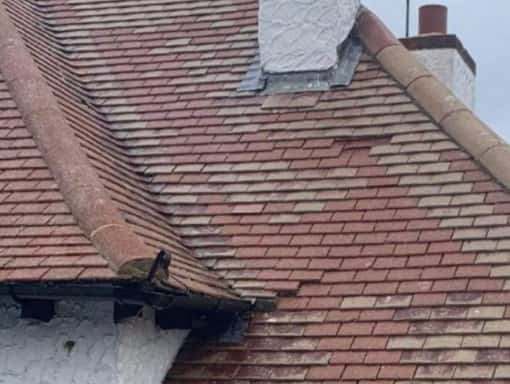
Does the Roof Contain an Inconsistent Patchwork?
Multiple repairs carried out at different times can leave a roof with mismatched materials, varied fixing methods and uneven weathering. This does not automatically require replacement, but it can make future defects harder to diagnose and repair effectively.
If individual patches are failing around their edges or the remaining original materials are deteriorating, replacing the covering may provide a more consistent roofing system.
Is Damage Limited to One Roof Slope?
Occasionally, one slope deteriorates faster because of its exposure, surrounding features or earlier alterations. If the other sections remain sound, work may be confined to the affected area.
The junction between renewed and retained materials must be carefully planned. A professional assessment can determine whether partial replacement will integrate reliably with the existing roof.
What Signs May Point Towards Replacement?
Replacement may deserve consideration when several of the following conditions are present:
- Leaks recurring in different locations
- Widespread tile or slate deterioration
- Repeated movement caused by failing fixings
- Extensive underlay failure
- Large areas of weakened battens
- Significant structural deterioration
- Repairs that no longer remain effective
- Several major components reaching poor condition together
No single sign should determine the decision without inspection. The overall pattern of deterioration provides the clearest evidence.
Why a Professional Roof Assessment Matters
An inspection should establish not only what is damaged but why the damage occurred. It should also examine whether the surrounding materials can support a durable repair.
This prevents a roof from being replaced unnecessarily while avoiding repeated patching where deterioration has become too extensive. Homeowners can then make a decision based on the roof’s actual condition rather than its appearance alone.
Conclusion
A roof is usually suitable for repairs when defects are localised and the surrounding covering, underlay, battens and structure remain sound. Replacement becomes more appropriate when deterioration is widespread, leaks keep returning or several roofing components are failing together.
TW Roofing Solutions provides professional roof assessments for properties in Tunbridge Wells, Kent. If you are unsure whether your roof requires targeted repairs or replacement, contact our team to arrange an inspection and receive clear guidance on the appropriate next step.
Call us on: 01892 481884
Click here to find out more about TW Roofing Solutions
Click here to complete our contact form and see how we can help with your roofing needs